SQL Topics
What is Primary Key in SQL
06/04/2026
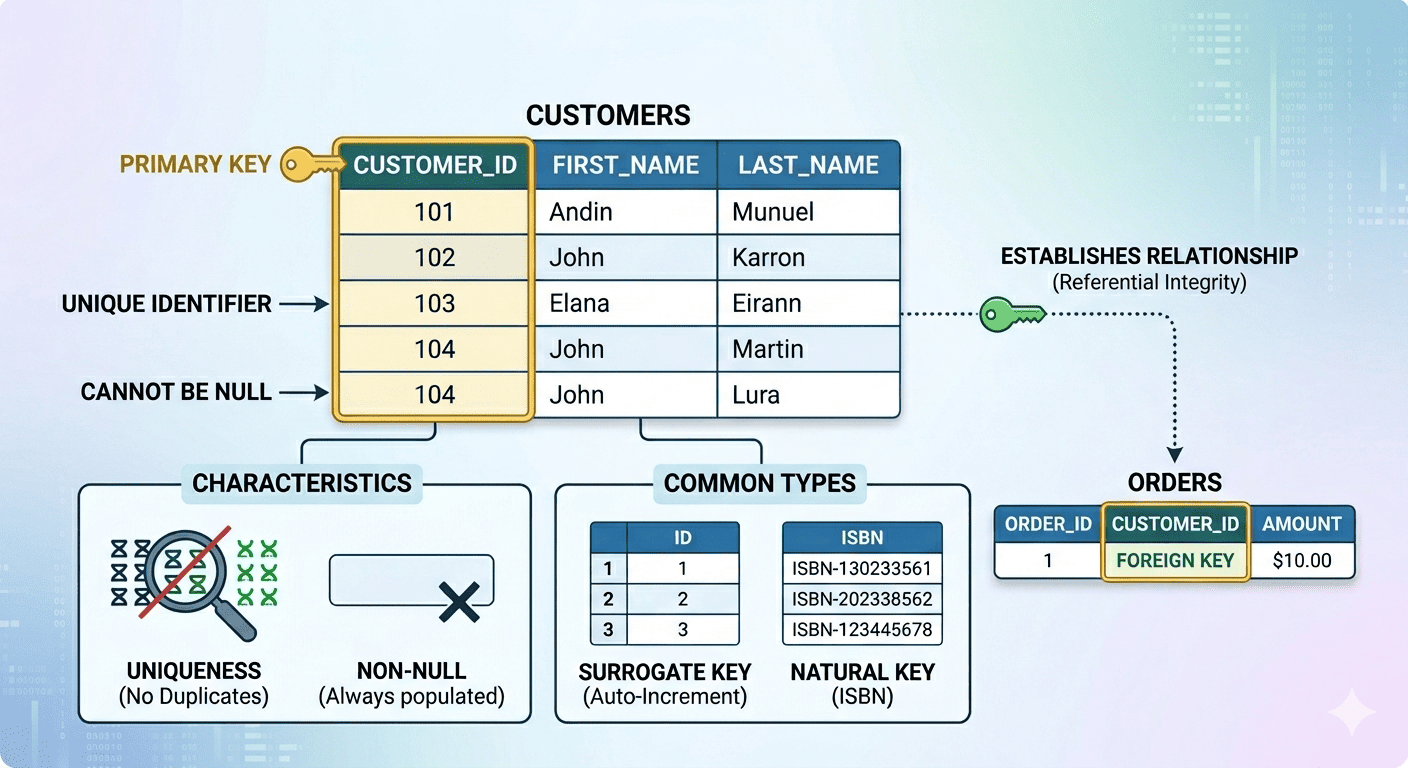
A Primary Key is a fundamental concept in relational databases used to uniquely identify each record (row) in a table. Think of it as a digital fingerprint or a Social Security number for your data.
Primary Key Characteristics
To qualify as a Primary Key, a column (or set of columns) must follow three strict rules:
- Uniqueness: No two rows can have the same value in the primary key column.
- Non-Null: It cannot contain
NULLvalues. Every record must have a valid identifier. - Immutability: Once assigned, primary key values should ideally never change, as they are often used to link different tables together.
Types of Primary Keys
- Simple Primary Key: Consists of a single column (e.g.,
EmployeeID). - Composite Primary Key: Consists of two or more columns combined to create a unique identifier. This is common in “mapping” tables that link two other entities.
- Surrogate Key: A unique identifier that has no “real world” meaning, often an auto-incrementing integer (e.g.,
id: 1, 2, 3...). - Natural Key: A unique identifier that exists in the real world, such as an ISBN number for a book.
Why use a Primary Key?
- Data Integrity: It ensures that you don’t accidentally insert duplicate records into your database.
- Fast Retrieval: Databases create a “Clustered Index” on the Primary Key by default, making searches for specific IDs extremely fast.
- Relationships: It acts as the target for Foreign Keys in other tables, allowing you to create structured relationships (like linking a
CustomerIDin anOrderstable to the mainCustomerstable).
SQL Syntax Example
You can define a primary key when creating a new table or by modifying an existing one.
Creating a table with a Primary Key:
CREATE TABLE Users (
    UserID int NOT NULL,
    UserName varchar(255) NOT NULL,
    Email varchar(255),
    PRIMARY KEY (UserID)
);
Adding a Primary Key to an existing table:
ALTER TABLE Users
ADD PRIMARY KEY (UserID);
Note: A table can have only one primary key. While a primary key can consist of multiple columns (composite), you cannot have two separate primary keys in a single table.
Last Shared

What is AI Slop?

WordPress SEO Plugins
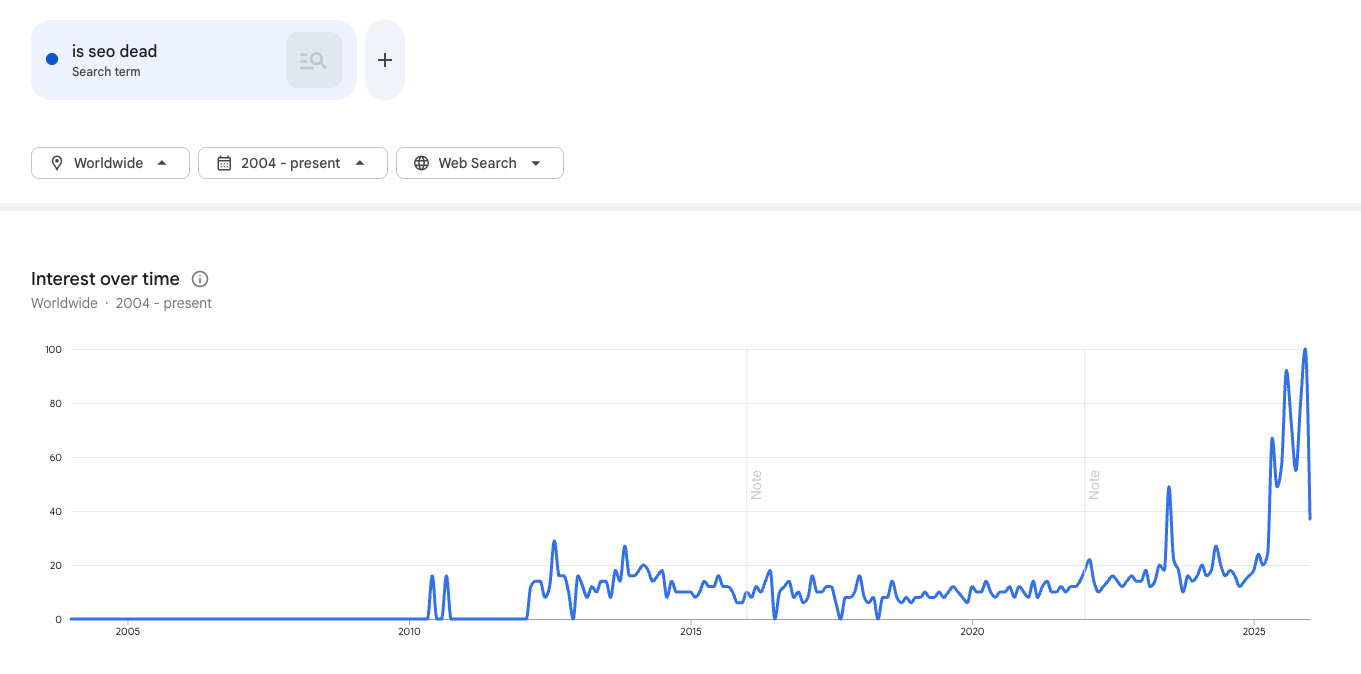
Trends of “is SEO dead?”

Google Gemini Introduced Personal Intelligence
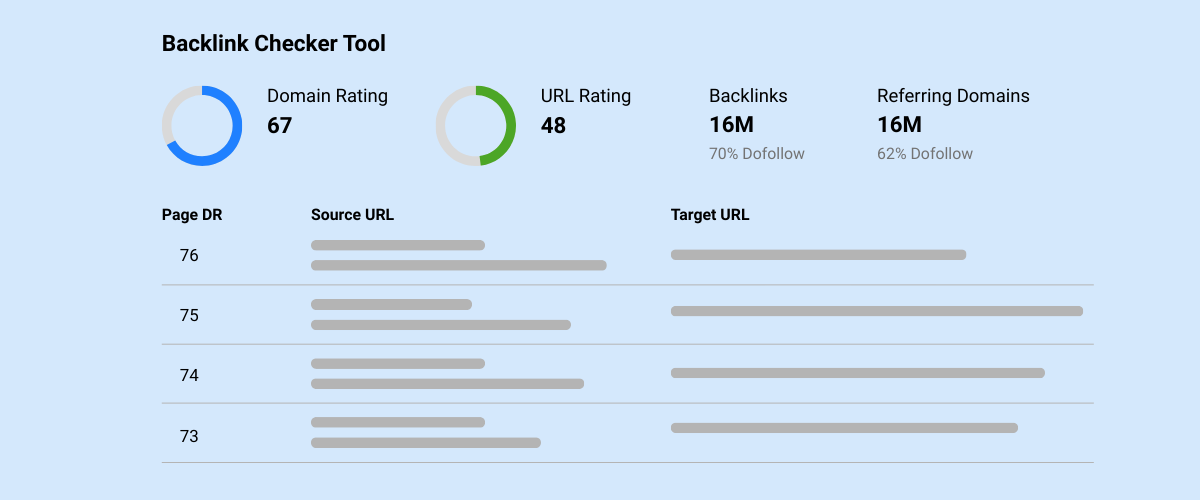
Backlink Checker Tools
Website Migration Procedures

Must Have Shopify Plugins

Hreflang (Alternate) Tag
What is Generative Engine Optimization (GEO)?