What is Google Loon?

Google Loon, later known simply as Loon, was an ambitious technology project developed by Google (under its parent company Alphabet) to provide internet access to remote and underserved areas using high-altitude balloons. Although the project was eventually shut down, it remains one of the most fascinating attempts to rethink global connectivity.
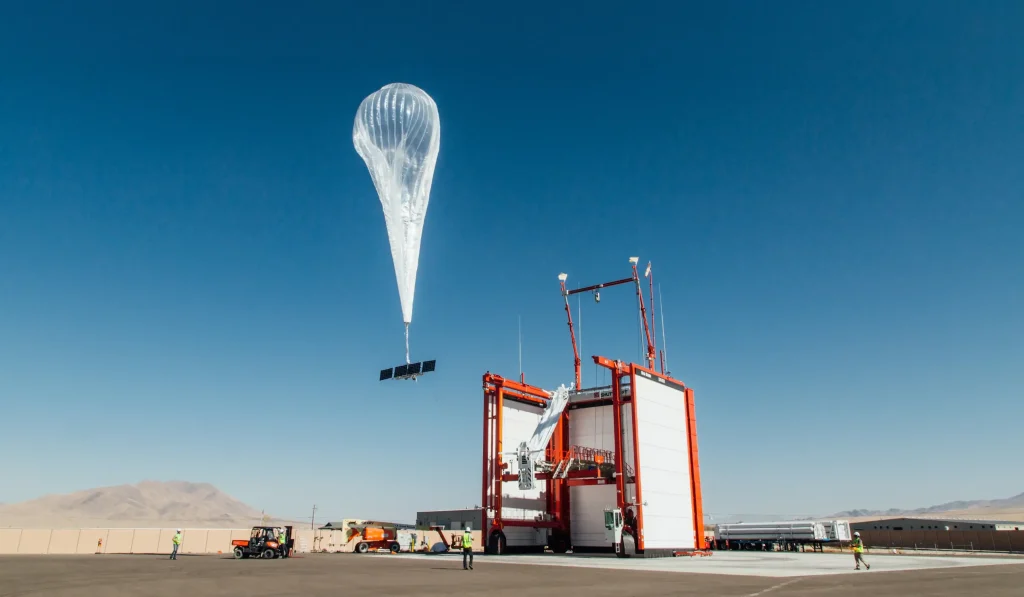
Google Loon was a project aimed at delivering low-cost, high-speed internet to rural and hard-to-reach regions by deploying stratospheric balloons approximately 18–25 kilometers above Earth.
These balloons acted as floating cell towers, forming a network in the sky that could transmit internet signals to ground stations and user devices.
Why Did Google Create Project Loon?
The Global Connectivity Problem
Billions of people around the world still lack reliable internet access due to:
- Difficult terrain (mountains, jungles, islands)
- High infrastructure costs
- Natural disasters damage communication networks
- Low population density in rural regions
Traditional solutions like fiber optics and cellular towers are often economically unviable in these areas.
How Did Google Loon Work?
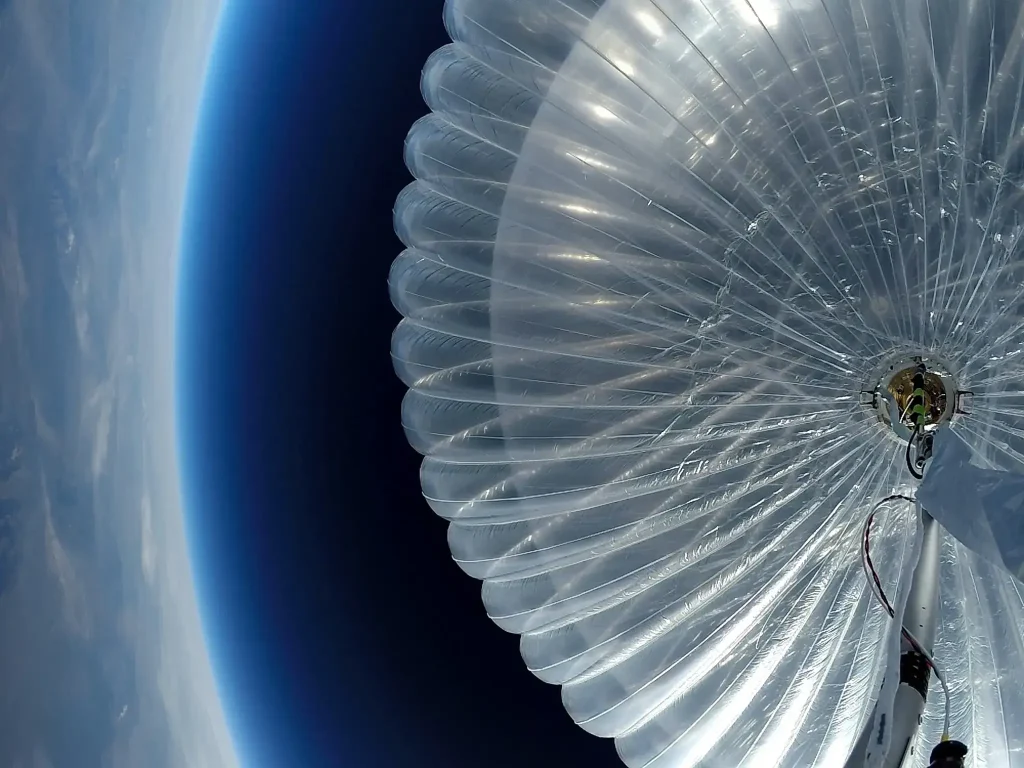
High-Altitude Balloons in the Stratosphere
Loon balloons were made of polyethylene plastic and were about the size of a tennis court when fully expanded. Each balloon floated in the stratosphere, far above airplanes and weather systems.
Key Components of a Loon Balloon
1. Communication Equipment
Each balloon carried:
- LTE radio antennas
- Signal transmitters and receivers
- Ground-to-balloon and balloon-to-balloon communication hardware
2. Power System
- Solar panels generated electricity during the day
- Batteries stored energy for nighttime operation
3. Navigation and Control
Balloons did not have engines. Instead, they:
- Changed altitude to catch different wind currents
- Used AI and machine learning to predict wind patterns
- Moved horizontally by riding winds at various heights
Balloon-to-Balloon Networking
Aerial Mesh Network
Loon balloons communicated with each other using wireless links, forming a mesh network in the sky. This allowed data to travel across multiple balloons before reaching a ground station connected to the internet backbone.
User Connectivity
From the user’s perspective:
- A standard LTE-enabled smartphone could connect
- No special hardware was required
- The experience was similar to using a regular cellular network
Real-World Deployments of Google Loon
Disaster Recovery Use Cases
Google Loon proved especially valuable during emergencies:
Puerto Rico (2017)
After Hurricane Maria destroyed much of the island’s telecom infrastructure, Loon balloons restored internet access for hundreds of thousands of people.
Peru (2019)
Loon provided connectivity after earthquakes disrupted ground-based networks.
Rural Internet Access
Loon also ran pilot programs in:
- Kenya
- Sri Lanka
- India (experimental trials)
In Kenya, Loon even partnered with local telecom operators to offer commercial internet services.
Technologies Behind Google Loon
Artificial Intelligence and Machine Learning
AI was essential for:
- Predicting stratospheric wind behavior
- Optimizing balloon positioning
- Maintaining network stability
LTE and Telecommunications Standards
Unlike experimental protocols, Loon used existing LTE standards, making it compatible with standard mobile devices.
Advantages of Google Loon
Rapid Deployment
- Balloons could be launched quickly
- Ideal for disaster response
Lower Infrastructure Costs
- No need for towers or underground cables
- Especially effective in remote or rural areas
Wide Coverage
- One balloon could cover thousands of square kilometers
Challenges and Limitations
Operational Costs
- Manufacturing and launching balloons was expensive
- Maintenance and replacement were ongoing costs
Network Reliability
- Wind unpredictability added complexity
- Maintaining consistent coverage was difficult
Business Sustainability
- Despite technical success, the project struggled to become profitable
Why Was Google Loon Shut Down?
In January 2021, Alphabet announced the closure of Loon.
Key Reasons for Shutdown
- High operational costs
- Difficulty scaling sustainably
- Lack of a viable long-term business model
- Competition from alternative technologies like satellites
Alphabet concluded that although Loon worked technically, it did not work economically.
Google Loon vs Satellite Internet
| Feature | Google Loon | Satellite Internet |
|---|---|---|
| Altitude | ~20 km | 500–36,000 km |
| Latency | Low | Medium to High |
| Deployment | Balloons | Satellites |
| Cost Structure | Operational-heavy | Capital-heavy |
| Scalability | Limited | High |
Legacy and Impact of Google Loon
Although discontinued, Google Loon left a lasting impact:
- Proved that stratospheric platforms are viable
- Advanced AI-driven navigation systems
- Influenced future connectivity solutions
- Inspired similar projects in the aerospace and telecom sectors
Conclusion: Why Google Loon Still Matters
Google Loon was a bold experiment that challenged conventional thinking about internet infrastructure. While it ultimately failed as a business, it succeeded as a technological proof of concept and showed that innovation can come from looking to the sky.
Projects like Loon continue to shape how companies approach global connectivity, disaster response, and emerging network technologies.
Timeline Details
- 2011 – The project began as a secret initiative inside Google X (the company’s experimental “moonshot” lab).
- 2013 – It was officially announced to the public under the name Project Loon.
- 2018 – It became an independent company under Alphabet Inc., simply called “Loon.”
- 2021 – The project was shut down.
So while most people heard about it in 2013, the actual development started two years earlier, in 2011.
Source: